Big movements are often built out of small repetitions.
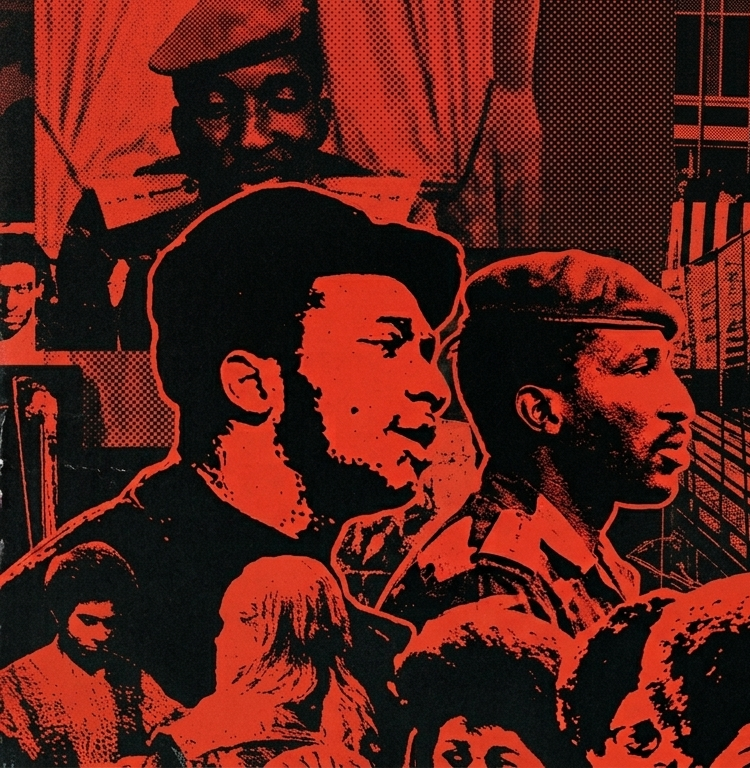
People like to remember the Black Panther Party through the image that travels fastest: the beret, the leather jacket, the rifle, the posture. That image is real(and fucking cool if you ask me), but it is incomplete. What made the Panthers powerful was not only spectacle. It was routine. Breakfast. Political education. Health clinics. Bail support. Shoes for children. Transportation. Discipline. Study.
That is what made Fred Hampton dangerous. As the FBI likes to paint it, there definitely is something scary about a person who is well off into routine and discipline makes them dangerous
Fred understood something that a lot of strong organizers catch onto earlier than the rest: people do not become revolutionary because you hand them a slogan. They become revolutionary when they begin to see, again and again, that the system is arranged to grind them down, and that collective action can interrupt that arrangement.
Small moves lead to massive shifts. (Compounding)
Hampton was a communist and not in the cartoon sense, but in the practical sense. One of the things he believed in is that if a society produces abundance and still leaves people hungry, that is not an accident of bad luck. It is a problem in the design. If some neighborhoods get schools, treatment, stability, and safety while others get surveillance, neglect, and extraction, then the problem is not personal failure. The problem is how power has chosen to distribute life chances.
Communism, in that frame, starts from a blunt moral claim: the wealth created by many should not be hoarded by a few. The point is not envy. The point is structure. Who owns? Who decides? Who eats first? Who waits?
Hampton pushed that question with unusual clarity because he joined it to material service. He was not saying, “one day the world should be different.” He was saying, “feed the child this morning, teach the teenager this afternoon, organize the tenant tonight, and let all of that accumulate into a new political imagination.”
It wasn’t just in the heart of Hampton and his fellow Panthers that the God of the oppressed was igniting the fire of radical revolution. In similar spirit, albeit politically more powerful than Panthers, the first president of the then Upper Volta, now Burkina Faso, Thomas Sankara was a remarkable demonstration of how one could incrementally revolutionize the life of the people they are fighting for, in unbelievably short span of time.
The moment he assumed power to the throne, he prioritized feeding the hungry and providing medical care and vaccines to his fellow countrymen who were suffering severely from polio, meningitis, and measles. In striking difference to our typical African politicians, he managed to make real-world changes to the very lives of the people in his per-view by implementing large-scale housing and infrastructural projects and raising the literacy rate from 13% to ~73% in span of four years.
Advocacy for equal rights of women was another issue he advanced his revolution into. He considered the liberation of women from patriarchal system to be a core part of his revolution: “The revolution and women’s liberation go together. We do not talk of women’s emancipation as an act of charity or out of a surge of human compassion. It is a basic necessity for the revolution to triumph.” The revolution he started was instrumental in reforming the lives of the people of Burkina Faso in every facet.
That is compounding.
One breakfast program by itself is a meal.
Many breakfast programs, sustained, become proof.
One reading group is a room.
Many reading groups, sustained, become ideology with muscle.
One act of solidarity is a gesture.
Thousands of acts of solidarity, sustained, become power.
This is one reason the state feared the Panthers so much. It is manageable when oppressed people are exhausted, isolated, and forced to improvise alone. It is less manageable when they become organized, fed, educated, and connected to one another. Repression usually arrives right when scattered pain starts turning into disciplined coordination.
Mary-Frances Winters, in Black Fatigue, gives language to another part of this story. She writes about the cumulative wear of racism, not just the dramatic blows but the daily abrasion. The guardedness. The code-switching. The vigilance. The constant need to interpret whether a slight was intentional, structural, or both. Fatigue is not only physical tiredness. It is the draining effect of having to carry race-consciousness through institutions that often demand your labor while refusing your full humanity.
Read Hampton beside that idea and you start connecting dots.
The Panthers were not only confronting police violence or capitalist exploitation in the abstract. They were also confronting exhaustion. They were trying to build conditions in which Black people could breathe a little more, eat a little more, trust a little more, and fear a little less. Their programs were political, yes, but they were also anti-fatigue measures. They reduced friction. They converted despair into rhythm.
That matters because fatigue is politically useful to the status quo.
Tired people retreat.
Tired people narrow the horizon of what they think is possible.
Tired people spend their days surviving the immediate and have less left for imagining the structural.
If you want to stop transformation, one effective strategy is to make people too depleted to persist.( i do want to talk about burnout society by byung chul han and how it all comes into effect but im too tired, lol)*
Taking all that in, Hampton was not a motivational speaker, he organized care. He understood that hope becomes credible only when it acquires a schedule. And I think this may be one of the deepest overlap between the black panther politics and Winter’s framework. If racismis cumulative, then resistance must also be cumulative. If humiliation compounds, dignity has to compound too.
That is why the Panthers cannot be read only as an episode of militancy. They also belong to a longer tradition of practical human repair. Their insistence was that political theory had to touch the ground. Food had to reach the table. Medicine had to reach the body. Ideas had to reach the block. After all you need to have action in there.
Fred Hampton lived as if consciousness itself could be organized.
And maybe it can.
A child who eats before class thinks a little differently.
A tenant who sees neighbors show up learns a different lesson about power.
A community that studies together stops mistaking abandonment for fate.
These are small shifts at first. Then they stop being small.
The state killed Hampton at twenty-one because it recognized a pattern before many others did. He was helping people discover that solidarity is not sentiment. It is infrastructure. Once people learn that, they become harder to manage with fear alone.
The lesson still holds.
If domination compounds, liberation must compound.
If exhaustion compounds, care must compound.
If neglect compounds, organization must compound.
History changes when ordinary people keep making disciplined deposits into one another’s lives long after the spectacle has moved on.
That was part of Hampton’s gift. He made politics feel less like performance and more like repeated proof that another arrangement of life was possible.
“Not everything that is faced can be changed, but nothing can be changed until it is faced.” — James Baldwin