It built me and then it broke me after all is done, it left me the void

Hermann Hesse (1877–1962) was a German-born Swiss author and Nobel laureate renowned for his profound exploration of spirituality, self-realization, and the duality of human nature. His works, often influenced by Eastern philosophy, Jungian psychology, and German Romanticism, have captivated readers across generations.
Hesse’s literary career began with Peter Camenzind (1904), which established him as a writer and celebrated the joys of nature and individuality. His most famous novels include Siddhartha (1922), an allegorical journey inspired by Buddhist teachings; Steppenwolf (1927), a deeply introspective work blending autobiography and fantasy; and The Glass Bead Game (1943), a philosophical masterpiece for which he received the Nobel Prize in Literature in 1946. Other notable works include Demian, Narcissus and Goldmund, and Journey to the East.
Siddhartha is one those novels that one finds in every short novel list, it is also the list of books that you should read once before you die, the gist of the book i have know for most part of my life since its talked about and cited in literary talks, book clubs and some friends of mine.
As always the arrogant me, quoth “Oh Siddhartha by hesse I know how that goes.. “ and trust me, I don’t. Because I went on a ride which I would never forget and only few books in which I have experienced that, I ate up the book within a span of 2 days due to work and other reasons.
The story of this young man named Siddhartha who is trying to understand himself and reality, though if you come in with the knowledge of the Buddha it would seem kind of familiar but a parallel story from the Buddha. The name Siddhartha means one who achieves his goals, was also the name of the Buddha originally Siddhartha Gautama.
And we follow him through a series of changes and realizations fueled by hunger and thirst for knowledge, seeking wisdom, finding love, young and full or arrogance. There was pain there was joy and there was sadness and there was happiness, there was lust and all what one can imagine, the full cycle of life from the highs to the lows.
Throughout the story following Siddhartha and his friend Govinda go from brahman1 to samana2 and hear about the great teachings of Gautama so they go to see him to learn from him and Govinda Siddhartha’s friend is so impressed that he stays, but Siddhartha realizes that whatever the Buddha realized that allowed him to become enlightened he can’t teach that to anyone else, Siddhartha realizes that he has to go his own way do it on his own, he has to have all this experiences that will allow him to discover who he is and attain nirvana3 , Siddhartha realizes that wisdom cannot be taught and it comes from personal experiences so he moves on. The unique thing about Siddhartha is that instead of trying to get rid of the EGO and desire and suffering he recognizes their importance in the process of attaining self-knowledge and wisdom, which is not very Buddhist.
The writing style is simple, mythical and expressive, its calm and meditative also dark and grim and intense. This is the first of novels I have read, his other novels also deal with the theme of self-discovery which I will get to. Another interesting thing I learned was that Hesse suffered a great deal of depression after writing part one over a year a lot of stuff was happening a full life crisis and he was treated by Joseph lang who was a disciple of Carl Jung and finally he was able to write part two, Hesse also said in addition to Chinese and Indian philosophy he was influence by western philosophers such as Schopenhauer, Spinoza, Plato, Nietzsche, and you can find some very interesting Nietzschean themes in the story the overcoming of the self, the impossibility of an objective teachable truth and the necessity of suffering when becoming stronger.
Its about the individual, all of the components, stages of life of the individual. It’s a story about unifying the conflicting elements of good and evil in the individual, which ties to Jung’s idea of the shadow or incorporating the shadow. It asks some big questions what is enlightenment, what is the meaning of life, can we eliminate suffering or should we?, what is the need and necessity for suffering and should we do away with it or do we recognize its importance and utilize it to become stronger.
You must experience the bad along with the good to attain enlightenment, you are not good or bad you are, a man’s discovery over the course of his life of times non-existence told in a linear narrative.
There is nothing more that i can say about this book that has never been said before about it and as Siddhartha quoth “The words are not good for the secret meaning, everything always becomes a bit different, as soon as it is put into words, gets distorted a bit.”
After finishing the book and sleeping on it something similar that came to mind was The Alchemist by Paulo Coelho, and upon research for writing this blog i found out that Coelho has openly cited Hesse as a significant inspiration, particularly for his themes of spiritual quest, self-discovery, and the blending of Eastern and Western philosophies, and you guessed it the books was Siddhartha.
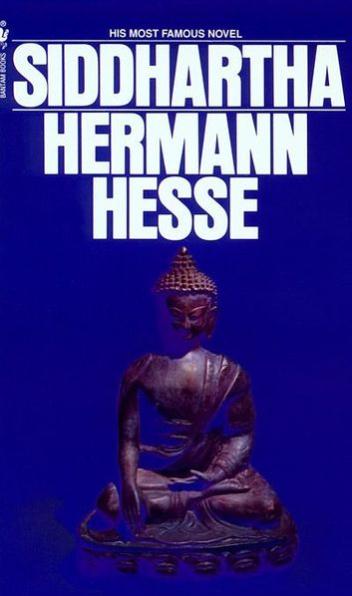
Some Highlights
The World tasted bitter. Life was torture
Or do we perhaps live in a circle we, who have thought were escaping the cycle
You know how to talk wisely, my friend. Be aware of too much wisdom
Love can be obtained by begging, buying, receiving it as a gift, finding it in the street, but cannot be stolen
So it seems to be indeed. everyone takes, everyone gives, such is life
What should I possibly have to tell you, oh venerable one? Perhaps that you’re searching far too much? That in all that searching, you don’t find the time for finding?”

